What is a family emergency folder
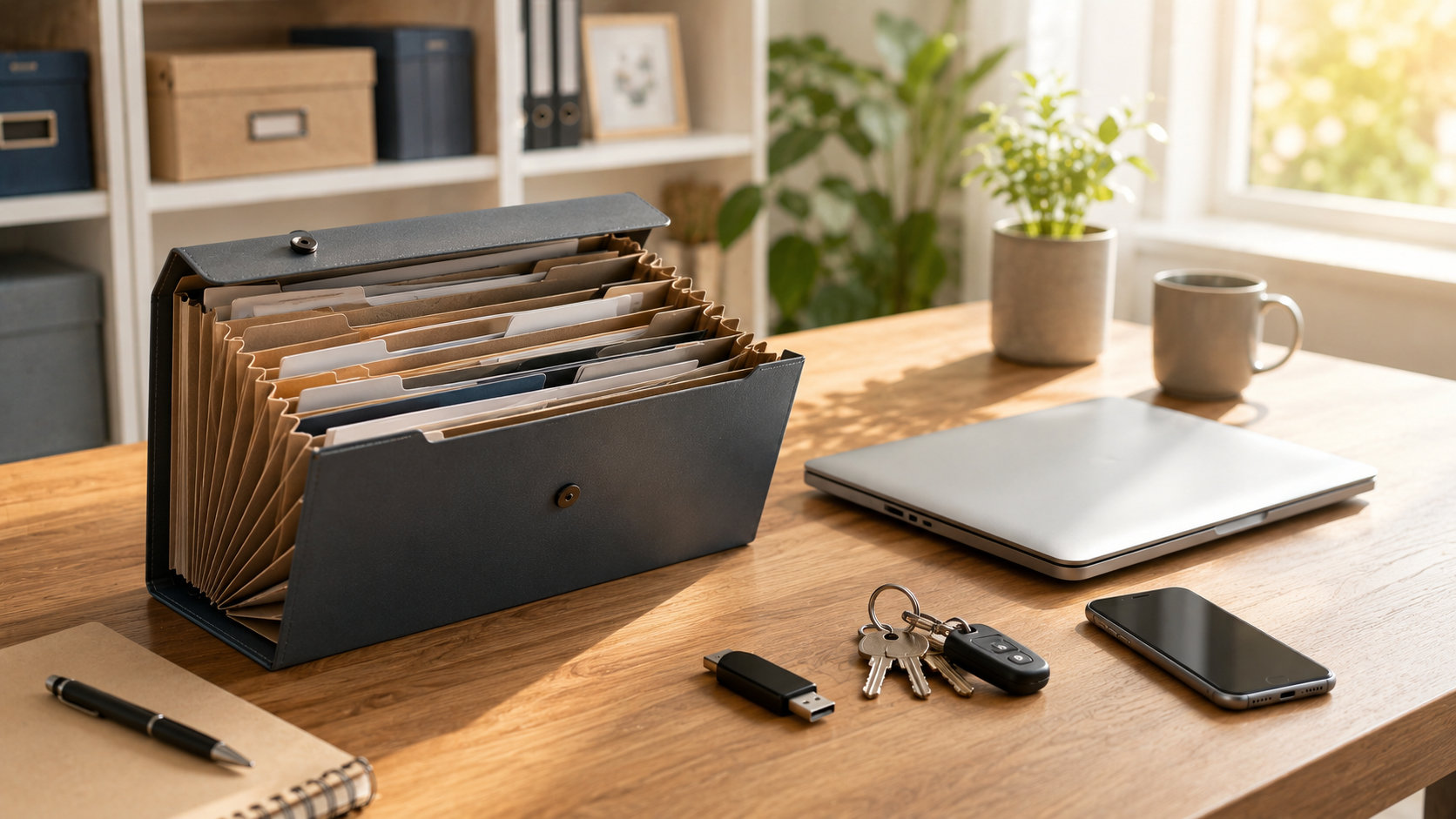
Your mother calls from the hospital. Your father has just been admitted. You need his social security card, your general practitioner’s name, the list of medications he takes, and the insurance phone number. You have ten minutes before the admissions desk closes.
Where is all of that?
It’s not a will, it’s an instruction manual
A family emergency folder has nothing to do with inheritances or lawyers. It is a document that contains the information someone would need if you could not provide it at that moment.
It’s not for when you die. It’s for when you are unconscious, hospitalized, injured, or simply unavailable during a family crisis. It’s the difference between your partner knowing where the car insurance policy is and them spending two days looking for it while the workshop waits for confirmation.
Most people don’t have this prepared because they don’t know it exists or because they think “I’ll tell them when necessary.” The problem is that emergencies don’t give notice.
What exactly should it include
A well-made family emergency folder has four sections: medical information, basic financial information, access details, and critical contacts.
Medical information:
- Social security number and health card
- Blood type and known allergies
- Current medications with exact dosages
- Name and phone number of the general practitioner
- Medical insurance policy and client number
- History of surgeries or relevant illnesses
Basic financial information:
- Main bank and account number
- Where the credit and debit cards are
- Active insurances: home, car, life, health
- Current loans or mortgages
- Important direct debits: utilities, mortgage
Critical access:
- Passwords for the main computer or mobile
- Mobile code and unlock pattern
- Username and password for the main email account
- Where spare house and car keys are
- Safe or places where you store original documents
Emergency contacts:
- Lawyer or tax advisor
- Bank manager
- A trusted person who knows where everything is
- Direct family members with updated phone numbers
What it should not include: everything you would never use in a real emergency. You don’t need your family tree or your grandparents’ house deeds. Only what someone would need to operate in your name for 72 hours.
Why “my partner already knows where everything is” isn’t enough
Javier thought the same. He had been married for 15 years. His wife knew where he kept his important papers. Until he had a motorcycle accident and she had to file a report to the insurer while he was in surgery.
The insurance was in Javier’s name. The app password was his birth date… which his wife couldn’t recall precisely under pressure. The policy number was in an email. Which email? Nobody knew. It took three days to locate the information. The workshop had already started charging for storage.
Your partner may know where you keep things under normal circumstances. But in an emergency, with stress, haste, and fear, that information becomes fuzzy. The emergency folder is the plan B when plan A (that you are available) fails.
Physical format, digital format, or both
There are three ways to organize a family emergency folder: paper, digital, or hybrid.
Physical format: a cardboard folder or binder with all documents printed, kept in a known, accessible place. Advantage: it doesn’t depend on electricity, internet, or passwords. Disadvantage: if someone gains physical access to your home, they have everything. And if there’s a fire or theft, it disappears.
Digital format: a document on the computer, a note on the phone, or a PDF in the cloud. Advantage: easy to update. Disadvantage: if it’s on your computer and no one knows the password, it’s inaccessible. If it’s in the cloud without clear instructions, no one will know it exists.
Hybrid format: the most common approach for someone who really does it well. Physical documents for items that don’t change (ID, deeds, policies) and an updatable digital document for items that do change (passwords, contacts, current medications). Both reference each other: in the physical folder you note where the digital version is, and in the digital version you indicate where the physical copy is.
What matters is not the format. It’s that the information exists, is up to date, and at least two people know where to find it.
Who should have access
Here starts the dilemma. The folder contains sensitive information. You cannot leave it within reach of just anyone. But if only you know where it is, it loses all meaning.
The most common solution: a trusted person knows where the physical folder is or how to access the digital version. It could be your partner, a brother, a close friend. Someone you know will not snoop out of curiosity but would act if necessary.
Some people divide the information. The medical part is known by the partner. The financial part is with the brother. The digital access is with your best friend. It’s not a bad strategy, but it adds complexity. In a real emergency, coordinating three different people can be a problem in itself.
What doesn’t work: leaving everything to your parents if they are over 70 and don’t use a computer, or to your younger brother who moves cities every six months and loses his phone every three days.
When to update it
A family emergency folder that isn’t updated is almost worse than not having one. Because it creates a false sense of security.
Medications change. Insurances renew or cancel. Passwords are changed. Contacts change numbers. If the information is two years old, when someone needs it they will waste time verifying incorrect data.
The simplest rule: review it whenever something important changes. You switch banks, update the folder. You start a new medication, update the folder. You renew the car insurance, update the folder.
If that sounds like too much work, then do it at least twice a year. Choose two easy-to-remember dates: your birthday and New Year’s Day, for example. Thirty minutes every six months can prevent days of searching during a crisis.
What if you have no partner or close family
Many people live alone, without a partner and with family in another city or country. Does a emergency folder make sense in that case?
Especially.
If there’s no one in your immediate circle, an accident leaves you in a much more vulnerable situation. Emergency services need data. The hospital needs contacts. Your landlord needs someone to pay the rent if you’re in the hospital for three weeks.
In this scenario, the folder becomes even more critical. And the trusted person can be someone at a distance: a cousin, a college friend, someone you keep in regular contact with. The important thing is that this person knows the folder exists and how to access it if needed.
Some people leave instructions with their GP or with the building manager. Not the full documents, but a note indicating who to contact if something happens.
Common errors that invalidate the folder
Error 1: Making it too complicated. If you need an instruction manual to use your own emergency folder, no one else will be able to use it. It has to be obvious.
Error 2: Including incorrect passwords. You put the bank password you used three years ago. Someone tries to enter. The account is locked. You made the situation worse.
Error 3: Not telling anyone that it exists. You create the perfect folder. You store it in a safe place. No one knows it’s there. It’s as if you hadn’t made it.
Error 4: Mixing emergency documentation with legal documents. The will doesn’t go in the emergency folder. Property deeds don’t either. This folder is operational, not patrimonial.
Error 5: Not protecting it at least a little. If it’s on paper, don’t leave it in plain sight. If it’s digital, don’t name it "Emergency Folder" on your desktop without any protection. Find a balance between accessibility and security.
Where to start if you’ve never organized anything
Start with the minimum viable: a sheet of paper with three things. Your blood type, the phone number of your emergency contact, and your mobile password. That alone already helps.
From there, add layers. Your medication list. Your main bank. Your car insurance. Don’t try to make the perfect folder in one afternoon. Make it useful in thirty minutes and improve it over time.
If you don’t know where to start organizing so much information, ask yourself this: if tomorrow you have an accident and your partner, your brother, or your best friend has to manage your life for a week, what information would they urgently need? That’s what goes in the folder.
The rest can wait.